VERY BEST QUOTES.COM

+ نوشته شده در سه شنبه نوزدهم شهریور ۱۳۹۲ ساعت 11:24 AM توسط Masoud Ghadiri(مسعودقدیری)
|

π (pi)

Any of you knew what it means?
π (pi) : the ratio of a circumference of a circle to its diameter.
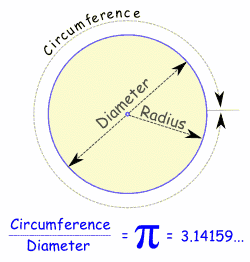
π=3.1415926535
And it's just the beginning. Keeps on going forever, without ever repeating. Which means that contain within this sting of decimals is every single other number. Your birth-date , combination to your locker , social security numbers ,... all in there somewhere.
And if you convert these decimals into letters you would have every word ever existed in every possible combination. The first syllable you spoke as a baby, The name of your latest love , Your entire life story from the beginning to end , Everything we ever say or do , All of the worlds infinite possibilities rest within this one simple circle.
Now what you do with that information , what it's good for , well that would be up to you...
My number is in there, somewhere. You are smart, you'll figure it out.
The URL and address of the Pi numbers in different websites :
http://pi.karmona.com/ (10 million digits)
http://apod.nasa.gov/htmltest/gifcity/e.5mil (5 million digits)
http://zenwerx.com/projects/pi-digits/pi/ (4 million digits)
http://www.piday.org/million/ (1 million digits)

در چت روم ها و محل هایی که در آنها چت صورت می گیرد، از برخی اصطلاحات و کلمات مخففی استفاده می شود که کار نوشتن متون و پیام های طولانی را راحت تر می کند. در این جا چند پیام و اصطلاح معروف قرار می گیرد:
BRB مختصر be right back به معنای الان بر می گردم.
WLC مختصر welcome به معنای خوش آمدی.
U مختصر you به معنای تو.
HRU مختصر how are you به معنای حالت چطوره؟
CU مختصر see you به معنای می بینمت یا CUS مختصر see you soon به معنای بزودی می بینمت.
PLZ مختصر please به معنای لطفا.
TNX مختصر thanks یا TNQ مختصر thank you به معنای متشکرم.
OMG مختصر oh my god یعنی وای خدای من!
LOL مختصر laugh out loud یا lots of laugh به معنی خنده زیاد/ قهقهه.
۲ مختصر too به معنای همچنین/ بسیار
ASAP مختصر as soon as possible به معنای در اسرع وقت.
L8R مختصر later به معنای بعدا.
CUL8R مختصر see you later به معنای بعدا می بینمت.
GFN مختصر gone for now فعلا رفتم.
W8 مختصر wait به معنای صبر کن.
شما هم اگر اصطلاحی را می دانید که می توان به این لیست اضافه کرد، در نظرات بیان فرمائید.
با تشکر
منابع کارشناسی ارشد آموزش زبان انگلیسی
(روشتدریس) Methodology:
1- Principles of Language Teaching and Learning (D. H. Brown).
2- Teaching Foreign language skills (M.Celce Murcia).
3- Developing Second Language Skills (K. Chastain).
4- Chomsky’s Universal Grammar (V.J.Cook).
5- Approaches and Methods in Language Teaching (J.C.Richards, T.S. Rodgers).
6- Teaching Foreign language skills (W.M. Rivers).
7- Techniques & Principles in language Teaching (D.L. Freeman)
8- Longman Dictionary of applied Linguistics (J.C.Richards et.at.)
(آزمونسازی) Testing:
1- Testing Language skills: (Farhady, Jafarpour, Birjandy).
2- Testing English as a Second language (Harries).
3- Writing English Language Tests (Heaton).
4- Testing for language Teachers (Hughes).
5- Techniques in language testing (Madsen).
6- Language Testing (Birjandi, Mosallahnezad, Bagheridoost)
(زبانشناسی) Linguistics:
1- Teach yourself linguistics (Jean Aitchison).
2- Linguistics and Language (J.S. Falk).
3- An Introduction to Language (Fromkin & Rodman).
4- Phonetics and phonology (Peter Roach).
5- The study of language (G. Yule).
6- Semantics: A course Book (J.lyon)
7- Language & Lingnistics (J.lyon)
منابع کارشناسی ارشد ادبیات زبان انگلیسی
A) History of Literature
1- Lawrence, Seifter, Ratner. The McGraw-Hill Guide to English Literature. Vols. 1 & 2. McGraw-Hill, 1985.
2- Roberts & Thornley. An Outline of English Literature. Longman, 1984.
3- Sokhanvar, Jalal. An Abridged Edition of the Norton Anthology of English Literature. Vahid Pub, Tehran, 1986.
4- Stephen, Martin. An Introductory Guide to English Literature. Longman York Press, 1984.
5- Norton Anthology of the American Literature
B) Literary Terms
1- Abrams, M. H. A Glossary of Literary Terms, 7th Ed. Heine & Heine, 1999.
2- Cuddon, J.A. A Dictionary of Literary Terms. Penguine Books Ltd, Middlesex, England, 1984.
3- Sokhanvar, Jalal. The Practice of Literary Terminology. SMAT, Tehran, 1997.
4- Hebron, Malcolm. Mastering the Language of Literature. PALGRAVE MACMILLAN, N.Y., 2004.
5- Cuddon, J.A. Literary Terms & Literary Theory. Penguin Group. 1998.
C) Literary Criticism
1- Burns & McNamara. Literature, a Close Study. MacMilian, 1983.
2- Dutton, Richard. An Introduction to Literary Criticism. Longman York Press, 1984.
3- Guerin. A Handbook of Critical Approaches to Literature, 5th Ed. Oxford University Press, 2005.
4- Hall, Vernon. A short History of Literary Criticism. The Merlin Press, London, 1963.
5- Hicks & Hutchings. Literary Criticism. Edward Arnold Pub, 1989.
6- Lodge, David; Wood, Nigel. Modern Criticism and Theory, 2nd Ed. Longman, 2000.
7- Marsh, Nicholas. How to Begin Studying English Literature, 2nd Ed.
8- Webster, Roger. Studying Literary Theory, An Introduction. Edward Arnold, London, 1990.
9- Bressler, Charles E. Literary criticism, An Introduction to Theory and Practice. Pearson Education, Inc. 2007.
10- Bertens, Hans. Literary Theory, The Basics. Routledge, 2001.
11- Miller, Lindy. Mastering Practical Criticism. PALGRAVE
MACMILLAN, N.Y. 2001.
D) Poetry
1- Drew, Elizabeth. Poetry, A Modern Guide to its Understanding & Enjoyment. Dell Publishing Co. 1959.
2- Hill & Martin. Modern Poetry. Prentice Hall, 1999.
3- Perrine, Laurence. Literature, Structure, Sound and Sense, Vols. 1, The Elements of Poetry. Harcourt Brace Jovanovich, Inc. 1974.
4- Payande, Hossein. Introduction to Literature (2). Payame Noor Univ. Press, 1380.
5- Rezai, Abbas Ali. Poetry in English. SAMT Pub. 1997.
6- Robinson, Philip. Practical Approaches to Literary Criticism, Poems. Longman, 1988.
7- Thorne, Sara. Mastering Poetry. PALGRAVE MACMILLAN, N.Y.2006.
E) Drama
1- Clark, R. F. The Growth and Nature of Drama. Cambridge, 1965.
2- Cookson, Linda. Practical Approaches to Literary Criticism, Plays. Longman. 1988.
3- Perrine, Laurence. Literature, Structure, Sound and Sense, Vols. 1, The Elements of Drama. Harcourt Brace Jovanovich, Inc. 1974.
F) Novel & Short Story
1- Gelshenen & Key. Discovering Fiction, Vols. 1&2. Cambridge University 2001.
2- Hill, Robert; Martin, Alex. Modern Novels. Prentice Hall, 1996.
3- Perrine, Laurence. Literature, Structure, Sound and Sense, Vols. 1, The Elements of Short Story. Harcourt Brace Jovanovich, Inc. 1974.
4- Payande, Hossein. Introduction to Literature (1). Payame Noor Univ. Press, 1380.
5- Salami, Ismail. Study of Thirty Great Novels. Mehrandish Books, Tehran, 1999.
6- Willson, Robert. Practical Approaches to Literary Criticism, Novels. Longman, 1988. Press,
G) Literary Schools
1- Haghighi, Manoochehr. Literary Schools. Avaye Noor Pub, Tehran, 1993.
2- Related parts in Norton Anthology
منابع ازمون کارشناسی ارشد مترجمی زبان انگلیسی
1. meaning based translation – Larsen
2. اصول و روش ترجمه زبان انگلیسی دکتر کاظم لطفی پور ساعی
3. a text book of translation – P. Newmark
4.A vocabulary workbook for ESL students
5. واژه شناسی- پیام نور – دکتر تجویدی
6. کاربرد اصتلاحات و تعبیرات- غفار تجلی انتشارات سمت
7. ترجمه متون اقتصادی دکتر جعفر گوهری
8. ترجمه اسناد و مدارک دکتر اصلان زاده
9. ترجمه متون مطبوعاتی دانشگاه پیام نور
10. زبان تخصصی مترجمی زبان انگلیسی- مهرداد امیری- پوران پژوهش
11. زبان شناسی ترجمه
12. کتاب Yule
13. ترجمه متون سیاسی دانشگاه پیام نور
14. دستور زبان فارسی انوری-گیوی
15. جزوات درسی دکتر محمودی بختیاری انتشارات پوران پژوهش
16. گرامر انگلیسی
17. گرامر پایه در سطح کارشناسی زبان انگلیسی
18. TOFEL CBT , Bruce Roger, Thomson
19. Essential Words for TOFEL
20. NTC_ Cambridge, CBT (2004)
21.Oxford Advanced dictionary
22. واژه های مترادف و کاربرد انها- دکتر نوروزی خیابانی- انتشارات دانشگاه علامه طباطبائی
23. گرامر انگلیسی- طبیبی-پوران پژوهش
24.theories of translation دکتر علی میر عمادی- سمت
25.مبانی و اصمل روش ترجمه- دکتر فرحزاد- علامه طباطبا ئی
26. بررسی ترجمه متون اسلامی 1و2 دکتر اناری و دکتر الهی قمشه ای- سمت
27. بررسی مقابله ای ساخت فارسی و انگلیسی و تجزیه و تحلیل خطا ها- دکتر ضیائ حسیننشر ویرا
28. لغات و درک مطلبو پوران پژوهش- مهرداد امیری
منابع ازمون کارشناسی ارشد زبان شناسی
زبان و تفکر، دکتر محمدرضا باطنی
نگاهی تازه به دستور زبان، دکتر محمدرضا باطنی
توصیف ساختمان دستوری زبان، دکتر محمدرضا باطنی
مسایل زبانشناسی نوین، دکتر محمدرضا باطنی
چهار گفتار درباره زبان فارسی، دکتر محمدرضا باطنی
پیرامون زبان و زبانشناسی، دکتر محمدرضا باطنی
مجموعه مقالات درباره زبان، دکتر محمدرضا باطنی
مقدمات زبانشناسی، دکتر مهری باقری
آواشناسی زبان فارسی، دکتر یدالله ثمره
آواشناسی، دکتر علیمحمد حقشناس
تاریخچه مختصر زبانشناسی (فصل7و8)، دکتر علیمحمد حقشناس
درآمدی بر زبانشناسی همگانی، دکتر سید محمد ضیاء حسینی
دستور زبان فارسی، دکتر پرویز ناتل خانلری
مبانی زبانشناسی و کاربردآن در زبان فارسی، ابوالحسن نجفی
درآمدی بر آواشناسی، دکتر لطفالله یارمحمدی
واژه نامه زبانشناسی و علوم وابسته (ویرایش2)، همادخت همایون
بررسی زبان، جرج یول، ترجمهی نسرین حیدری
دوره زبانشناسی عمومی، فردینان دو سوسور، ترجمهی دکتر کورش صفوی
زبانشناسی و زبان، جولیا فالک، ترجمهی دکتر خسرو غلامعلی زاده
مبانی زبان، لارنس تراسک، ترجمهی علی فامیان
1-The Study of Language, 2nd ed. By: George Yule
2-An Introduction to Language, 4th ed. By: Victoria Fromkin and Robert Rodman
3-Linguistics and Language. By: Julia Falk
4-Linguistics. By: Jean Aitchinson
5-Language and Linguistics. By: John Lyons
6-The Dictionary of Phonetics and Phonology. By: David Crystal
زبانشناسی همگانی
درک مطلب و ترجمه متون زبان شناسی
واژگان گزیده زبان شناسی دکتر عاصی
A Dictionary of Linguistics and Phonetics : David crystal
An Introduction to Language : Fromkin
The Study of Language : George Yule
Linguistics and Language : Falk
Linguistics : John Lyons
Introductory Linguistics : Hudson
( ترجمه کتاب های نامبرده نیز توصیه می شود)
کلیه کتاب های دکتر باطنی( انتشارات آگاه):
. زبان و تفکر
.توصیف ساختمان دستور زبان فارسی
نگاهی تازه به دستور زبان
زبان شناسی جدید
مسایل زبان شناسی نوین
زبان و زبان شناسی: رابرت هال / ترجمه: دکتر باطنی
در باره زبان
آواشناسی :
آواشناسی زبان فارسی : دکتر ثمره (نشر دانشگاهی)
آواشناسی : دکتر خق شناس ( آگاه)
درآمدی به آواشناسی : دکتر یارمحمدی(نشر دانشگاهی)
واج شناسی:
نظام آوایی زبان : هایمن / ترجمه دکتر ثمره( انتشارات فرهنگ معاصر)
ساخت آوایی زبان : دکتر مشکوه الدینی( انتشارات دانشگاه مشهد)
معناشناسی:
معناشناسی : دکتر کورش صفوی(انتشارات سازمان تبلیغات اسلامی)
نحو :
نحو زبان فارسی بر اساس نظریه حاکمیت و وابستگی: دکتر میر عمادی(انتشارات سمت)
دستور زبان فارسی بر اساس نظریه گشتاری ( دکتر مشکوه الدینی)
دستور زبان فارسی:
دستور زبان فارسی( دو جلد):انوری و احمدی گیوی (انتشارات فاطمی)
دستور زبان فارسی امروز: غلام رضا ارژنگ(نشر قطره)
دستور زبان فارسی: دکتر خانلری
تمرین های کلاس دستور زبان فارسی: انوری(انتشارات سخن)
تاریخ زبان شناسی و مکاتب زبان شناسی
زبان شناسی نظری: دکتر دبیر مقدم ( انتشارات سخن)
تاریخ مختصر زبان شناسی : دکتر حق شناس (نشر مرکز)
سیر زبان شناسی : دکتر مشکوه الدینی( دانشگاه مشهد)
تاریخ زبان فارسی
تاریخ زبان فارسی: دکتر مهری باقری
تاریخ زبان فارسی : دکتر خانلری( سه جلد)
تاریخ مختصر زبان فارسی: دکتر محسن ابوالقاسمی(کتابخانه طهوری)
دستور تاریخی زبان فارسی: دکتر ابوالقاسمی( انتشارات سمت)
تکوین زبان فارسی : دکتر علی اشرف صادقی
کتاب ها ی متفرقه:
مبانی زبان شناسی و کاربرد آن در زبان فارسی : ابوالحسن نجفی
مقدمات زبان شناسی : دکتر مهری باقری
مجموعه سوالات آزمون کارشناسی ارشد زبان شناسی همگانی: فروه غفوری(نشر دیدار)
ریشه شناسی(اتیمولوژی) : دکتر ابوالقاسمی(انتشارات ققنوس)
ترکیب در زبان فارسی : دکتر مقربی (انتشارات توس)
زبان و مسایل دانش : چامسکی(ترجمه ک دکتر علی درزی)(آگاه)
زبان شناسی اجتماعی : ترادگیل (ترجمه دکتر محمد طباطبایی)(آگاه)
درآمدی بر جامعه شناسی زبان : دکتر یحیی مدرسی)
ساخت زبان فارسی : دکتر خسرو غلامعلی زاده ( احیا کتاب)
ساخت اشتقاقی واژه در فارسی امروز( دکتر کلباسی)
گفتارهایی در زبان شناسی : کورش صفوی ( هرمس)
زبان شناسی و اسیب شناسی زبان : رضا نیلی پور (هرمس)
کلیه مجلات زبان شناسی ( سی ونه شماره)
 The brave new world demands us to move along with the breakthroughs we notice in the realm of online world. Surely, the cyber world has got its own fascination and a newly felt need for everyone, especially for language teachers. As language teachers, we need to make informed judgments and decisions about our students and to be aware of their needs and expectations.